
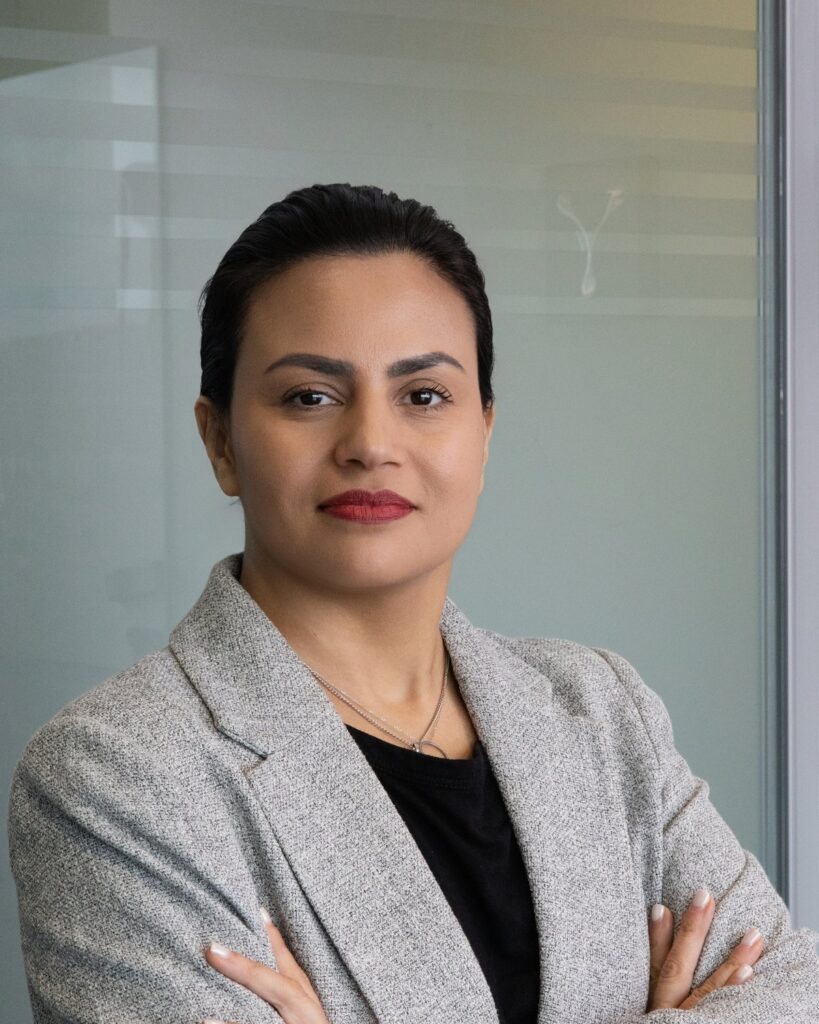
Zahra (Saba) Fuladvand
Performance Maker, Scenographer, Researcher
Zahra (Saba) Fuladvand is a performance maker, scenographer and researcher exploring audience engagement in unconventional environments and the ritual dimensions of community-based performance. She holds BA and MA degrees from Tehran Art University and a DLA (PhD) from the Hungarian University of Fine Arts, where her practice focused on site-responsive and urban performance.
Zahra works with participatory community-based projects that seek to connect intimate inner circles with public space through collective artistic experiences, ritual practices, and socially engaged forms of performance and scenography.
Presentation: “The Mirror as Witness: Staging War, Migration, and Memory”
15 October 2026, 14:15–14:30, In-Person Session. Symposium Agenda
Abstract
How can scenography transform the stage into a space for witnessing war, displacement, and cultural trauma? This practice-as-research presentation examines two of my performances, Mirror (2020) and Between Homes (2025), to investigate how reflective surfaces, displaced objects, and performing bodies can activate individual and collective memory.
In Mirror, a fully veiled performer travels on Budapest’s Metro Line M2 carrying a large, round mirror. The veil functions as a metaphor for the cultural differences and personal histories that migrants carry with them. The mirror reflects the Hungarian passengers’ reactions who become found audiences within this social space. Their encounters with the veiled figure reveal cultural boundaries and different responses to migrant bodies. The mirror thus becomes a mobile scenographic space in which the politics of looking are negotiated.
Five years later, Between Homes developed this visual and material vocabulary in response to migration and the effects of war in Iran. In this performance, two performers stand back-to-back, as if forming a single body with two directions of perception. One is veiled and holds a mirror, while the other holds scissors and attempts to cut grasses whose exposed roots are suspended in the air. An Iranian flag with a circular void at its center and expired residency cards form a fragile landscape of uprootedness, displayed on a table full of broken glasses. The performance and installation took place in a former Second World War bunker (Mária út 1, Budapest), where these personal objects intersect with the historical memory of the site. The performance explores how conflict continues to shape the lives of Iranians living abroad and their relationships with families and homeland.
Drawing on Diana Taylor’s concept of embodied memory and Jill Bennett’s understanding of trauma-related art as an affective encounter, I examine how scenographic materials can carry and communicate memories of migration and conflict. I argue that mirrors, fragmented objects, identity documents, and performing bodies do not merely represent displacement; they create encounters in which spectators are invited to reflect on their own position in relation to it. Through reflection, fragmentation, and participation, these performances transform theatrical and social spaces into sites of witnessing, resistance, survival, and public reflection.