
Ion
EURIPIDES
ION
Director Thomas Moschopoulos
ANCIENT THEATRE OF EPIDAURUS
Lighting design Georgios Koukoumas
About the lighting design
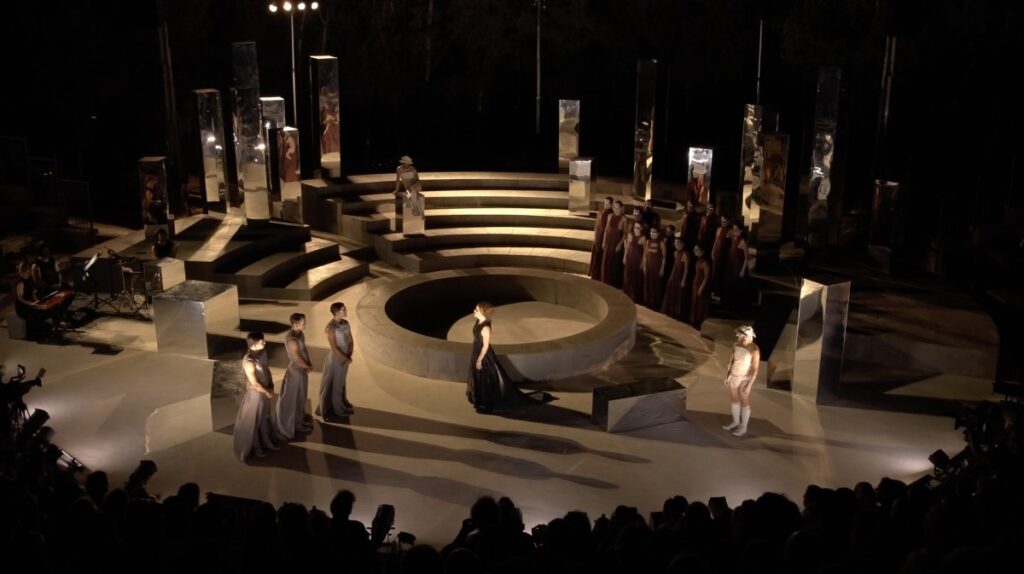
For Euripides’ Ion, staged at the Ancient Theatre of Epidaurus and directed by Thomas Moschopoulos, the lighting design was developed with complete artistic freedom, making light an integral part of the dramaturgy. The design focused on controlled transitions rather than spectacle, allowing shadow to carry as much meaning as illumination. Drawing on cinematic language, it borrowed framing, contrast, focus, and atmosphere, transforming the stage into a sequence of almost filmic images. This interplay between light and darkness echoed the play’s fragile boundaries between truth and uncertainty, presence and absence, knowledge and the unknown. Within the monumental scale of Epidaurus, the small handheld lantern introduced an intimate and vulnerable human presence, a fragile light suggesting a journey through darkness in search of identity, belonging, and hope.


